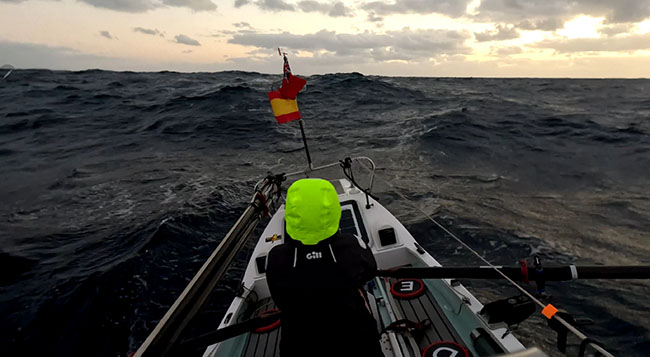

Ten hours after leaving Gran Canaria to row 3,000 miles across the Atlantic, my boat flipped upside down. One moment I was rowing, the next I was underwater in complete chaos.
There was a split second where panic tried to take hold, but when I reached the surface something unexpected happened — I felt calm. I didn’t think, analyse, or catastrophise. My body already knew what to do.  I moved with clarity and quiet certainty, as if I had stepped into a state of flow where everything unnecessary had fallen away. That moment set the tone for the entire journey because I realised, very quickly, that I could trust myself.
We often mistake instinct for emotion, but instinct is intelligent. It’s the part of us that reads situations faster than our conscious mind can process them. Yet in everyday life, we’ve trained ourselves to override it. We overthink, seek reassurance, and look outward for answers instead of listening inward. What most people don’t realise is that this calm wasn’t luck — it was trained. Around 80% of my preparation for the Atlantic was mental: visualising difficult scenarios, rehearsing problems before they happened, and learning how to bring my body back to calm under stress. When the boat capsized, I didn’t rise to the occasion; I fell to the level of my training.
The ocean teaches humility because you cannot control it — you can only respect it and stay present. In leadership, in life, and in high-stakes moments, we don’t always get time to think. We’re asked to trust what we already know. The Atlantic didn’t teach me how to row; it taught me how to trust my instinct. And instinct is not something you’re born with or without. It’s a skill you can relearn by sitting with discomfort, reducing noise, and paying attention to the signals your body is already giving you. Your instinct isn’t missing. It’s just been drowned out — and it can be strengthened again.
Where in your life are you overthinking something, your instinct already knows the answer to?